
Most of us know we should see a dentist regularly. But there is a difference between knowing and actually booking. And when nothing hurts, it is easy to tell yourself everything is fine. The trouble is, the problems an Oral Health Therapist catches are usually the quiet ones. They do not announce themselves with a toothache. They show up as a bit of pink in the sink, a taste that lingers, or a line of hard build-up you keep running your tongue over.
If you have been searching for an Oral Health Therapist in Perth because something does not feel quite right, this list will help you work out whether a professional clean is overdue.
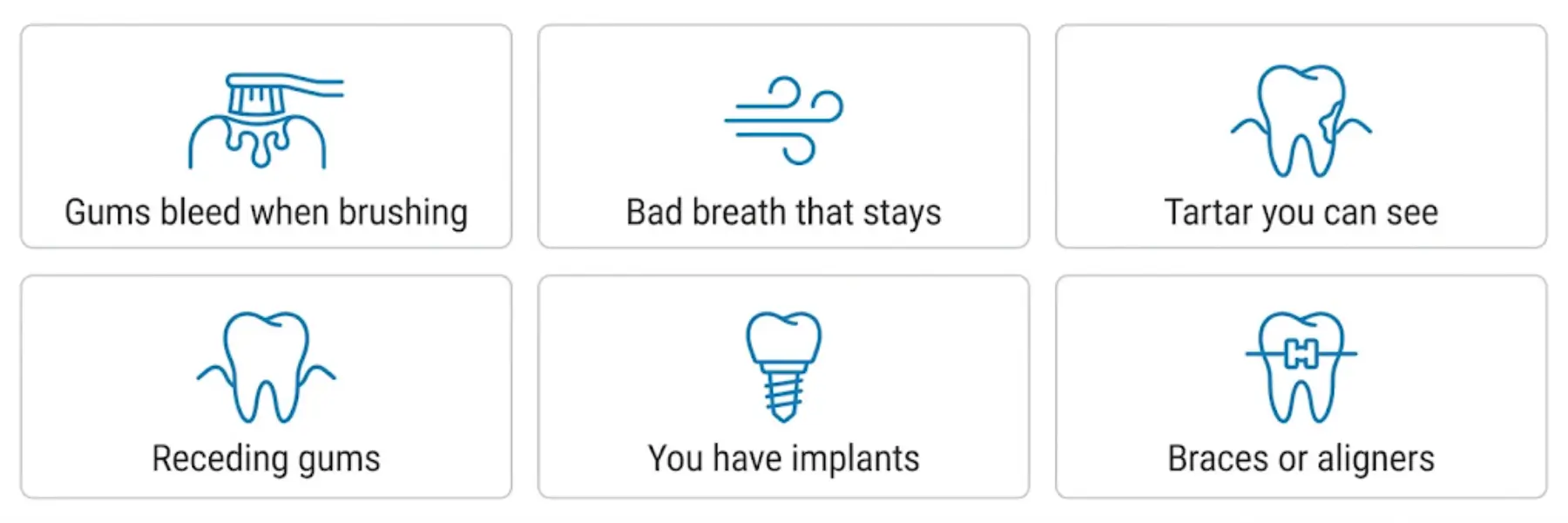
Sign 1: your gums bleed when you brush or floss
A small amount of blood when you floss for the first time in weeks is one thing. Gums that bleed regularly, every time you brush or floss, are telling you something else entirely.
Bleeding gums are a hallmark sign of gingivitis, the earliest stage of gum disease. At this point, the condition is caused by bacterial plaque sitting along and beneath the gumline, triggering inflammation. The good news is that gingivitis is reversible with professional cleaning and improved home care.
According to the Australian Institute of Health and Welfare (AIHW, 2025), around 29% of Australian adults aged 15 and over had gingivitis in 2017 to 2018. That is nearly one in three adults walking around with inflamed gums, many of them unaware.
An Oral Health Therapist can remove the plaque and calculus causing the inflammation, measure your gum pocket depths, and give you a tailored home care plan to stop it progressing.
Sign 2: bad breath that does not go away
Everyone has morning breath. That is not what we are talking about here. Persistent bad breath, the kind that does not improve with brushing, flossing, or mouthwash, often points to bacteria hiding in places your toothbrush cannot reach.
Common culprits include:
- Calculus (tartar) build-up below the gumline where bacteria thrive
- Periodontal pockets that trap food debris and bacterial plaque
- Tongue coating that harbours volatile sulphur compounds
- Untreated decay or failing dental work
A professional clean addresses the first two directly. Your hygienist can also check for other causes and refer you for further investigation if needed.
Sign 3: tartar you can see or feel
Plaque is a soft, sticky film that forms on your teeth daily. If it is not removed within 24 to 48 hours, it hardens into calculus (tartar), a rough, yellowish or brownish deposit that bonds firmly to the tooth surface.
Once plaque has mineralised into tartar, no amount of brushing will shift it. You need professional instruments, either an ultrasonic scaler or hand instruments, to remove it safely.
If you can feel a hard ridge along the inside of your lower front teeth or see a noticeable build-up at the gumline, it is time for a professional teeth cleaning. Leaving it allows bacteria to accumulate underneath, which is how gingivitis progresses to periodontitis and potential bone loss.
Sign 4: gums that look receded
Gum recession happens when the gum tissue pulls back from the tooth, exposing more of the root surface. You might notice your teeth looking longer than they used to, or you may feel increased sensitivity to hot and cold foods.
Recession can be caused by:
- Gum disease (the most common cause)
- Aggressive brushing with a hard-bristled toothbrush
- Grinding or clenching (bruxism)
- Misaligned teeth that place uneven pressure on the gums
A hygienist appointment helps identify the cause, removes any contributing build-up, and establishes a preventive plan. If the recession is significant, your dentist may discuss further treatment options during your examination.
Sign 5: you have dental implants
Dental implants are designed to function like natural teeth, but they are not maintained exactly the same way. The tissue around an implant (called peri-implant tissue) is more vulnerable to inflammation than natural gum tissue, and the condition that results, peri-implantitis, can lead to bone loss around the implant if it is not managed.
Regular professional cleaning is a key part of dental implant maintenance. At Mia Dental Centre, implant maintenance cleans are provided by both our hygienist and dentist, using specialised instruments that clean effectively around the implant without scratching its surface. Your clinician also monitors the health of the surrounding tissue at every visit.
If you have had implant surgery at Mia Dental Centre, your treatment plan will include a recommended maintenance schedule. For more on the recovery and ongoing care process, see our guide on what to expect after dental implant surgery.
Sign 6: you wear braces or aligners
Orthodontic treatment, whether traditional braces or clear aligners like Invisalign, changes the landscape of your mouth. Brackets, wires, and attachments create extra surfaces for plaque to cling to, and they make certain areas harder to clean at home.
Patients undergoing orthodontic treatment often benefit from more frequent hygienist visits, typically every three to four months rather than six. This helps prevent:
- Decalcification (white spot lesions around brackets)
- Gingivitis caused by plaque trapping around orthodontic hardware
- Tartar build-up in hard-to-reach areas
Even with aligners, which are removable, the attachments bonded to your teeth can make certain spots tricky to clean. A hygienist can reach what your brush misses and flag any areas that need extra attention.
What to do if you tick any of these
You do not need to wait for pain to book a hygienist appointment. In fact, by the time something hurts, the problem is usually well past the preventive stage.
If any of the signs above sound familiar, here is what to do next:
- Book a check-up and clean at our Wanneroo or Mount Lawley clinic. Your appointment will include an oral examination, periodontal assessment, and professional clean.
- Mention your concerns when you book, whether that is bleeding gums, persistent bad breath, or visible tartar. It helps us allocate the right amount of time.
- Ask about a maintenance schedule tailored to your situation. Some patients need three-monthly visits; others are fine at six months.
At our Wanneroo clinic, check-ups and cleans are performed by our dedicated Oral Health Therapist. At Mount Lawley, they are provided by both the hygienist and the dentist, depending on your appointment. Either way, you are in experienced hands.
For a full list of what is included in a general dental visit, see our general dentistry services page.
Tips and frequently asked questions
What is the difference between a dentist and an Oral Health Therapist?
A dentist diagnoses and treats dental conditions, including decay, gum disease, and structural issues. An Oral Health Therapist focuses on preventive care: professional cleaning, oral hygiene assessment, and patient education. In many practices, the two work together as part of the same visit. For more, visit our FAQs page.
How often should I see an Oral Health Therapist?
For most adults, every six months is a good baseline. If you have active gum disease, implants, or orthodontic appliances, your dentist may recommend every three to four months.
Can a hygienist help with teeth staining?
Yes. A professional scale and polish removes surface stains caused by coffee, tea, red wine, and smoking. For deeper discolouration, your dentist may discuss teeth whitening options.
Is a hygienist visit covered by health insurance?
Most extras policies cover preventive dental items, including scale and cleans. The level of cover depends on your fund and your policy. Check with your provider, or visit our health funds page for details on what we accept.
I am nervous about going to the dentist. Can a hygienist help?
Many patients find hygienist appointments more comfortable than they expect. If dental anxiety is a concern, Mia Dental Centre also offers sleep dentistry options to help you feel at ease.